


Patient Safety Is Not a Training Problem. It is a Capability Gap, And the Data Proves It.
June 16, 2026Share:


For decades, we have talked a lot about patient safety in healthcare. We train, survey, report outcomes, and design regulatory and accreditation programs to ensure it.
Why, then, are safety outcomes still so variable, and what would it take to improve them systematically and sustainably?
Patient Safety in Practice: Insights That Point to Capability
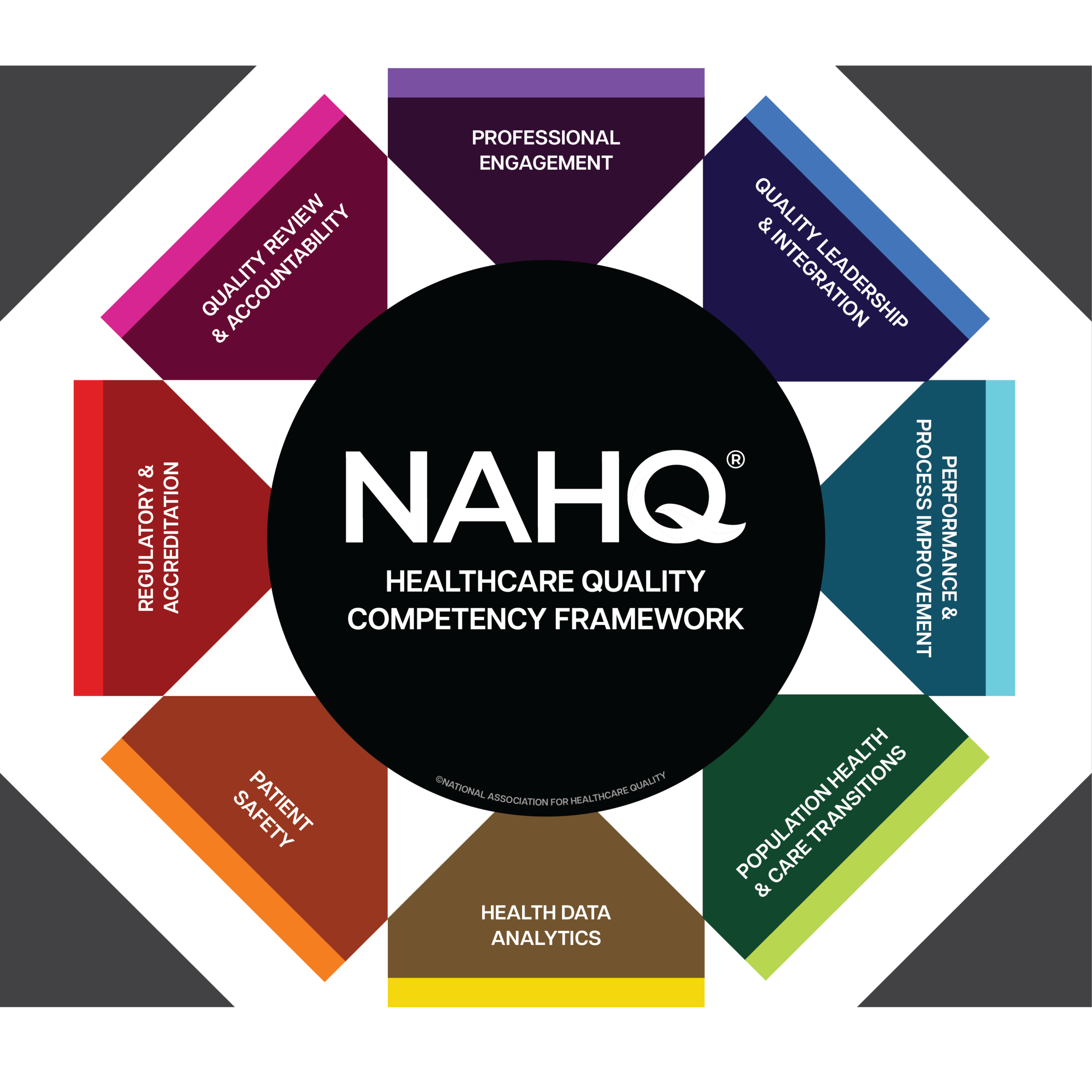
NAHQ maintains a database informed by healthcare workforce responses to our national professional assessment. The assessment measures workforce capability across eight domains of healthcare quality, using role-based standards aligned to the Healthcare Quality Competency Framework.
Recently, I reviewed NAHQ’s findings from NAHQ’s national data set. Insights were as positive as they were troubling. Here are a few insights from the patient safety data set that have stayed with me:
- Close to 20% of the 5,400 respondents said patient safety is ‘not applicable’ to their role.
- More than 6 in 10 healthcare quality professionals are not performing patient safety skills at the level their role requires.
- The most significant patient safety gap exists at the manager and director levels—where more than half are not executing role-appropriate competency levels.
These are more than data points. They provide information and insights regarding the workforce capability gaps that perpetuate safety issues and many other issues as well.
When a responsibility for safety is deemed “not applicable,” or when the work is not performed at the level the role requires, that responsibility does not simply disappear. It shifts into the vacuum between teams, between processes, or between expectations and execution.
And that’s where risk lives.
From Training to Workforce Capability
The opportunity, then, is not only to reinforce the importance of patient safety or to execute a one-size-fits-all training, but to ensure that each person working in healthcare understands their unique role and has the skills and behaviors to execute it. This represents a critical shift from training to building durable workforce capability.
Capability emerges when professionals can reliably apply patient safety competencies in ways that support the design and performance of work.
Building Capabilities: The Patient Safety Micro-Credential
Building organizational capabilities to improve systemwide safety is the thinking behind NAHQ’s new Patient Safety Micro-credential, the newest addition to our growing portfolio of programs aligned directly to the Healthcare Quality Competency Framework™.
Across seven modules, learners engage with:
- The foundations of safety culture;
- High-reliability and human factors principles
- Psychological safety and just culture
- Safety data and intelligence; learning from events; and
- Governance and collaboration.
The curriculum is scenario-based, practical, and designed to help professionals across the system, not just those in safety roles, develop the capability to:
- Recognize early signals of risk
- Connect culture, data, and process
- Act before harm occurs, not just respond after
From Individual Professional Development to Team Capability Building
Patient safety doesn’t improve through isolated effort. It improves when teams share a common language and competencies and a consistent way of working.
We’ve long recognized that safety is a shared responsibility that extends from the bedside to the boardroom. Yet when 1 in 5 professionals do not see patient safety as part of their role, it reflects more than perception. It reflects a gap in how work is defined, supported, and executed.
This is not simply a safety challenge. It is an execution challenge, and ultimately, a workforce challenge.
Progress will not come from just asking individuals to do more on their own. It will come from designing systems and building capabilities so that safety is embedded in how work gets done consistently and reliably every day.
We can achieve that by leveraging competency-based training, like the Patient Safety Micro-credential, built with NAHQ’s industry-standard framework, which is endorsed by Joint Commission, and enterprise-wide programs, like Workforce Accelerator, which has proven a return on investment in safety and quality (ROI-Q).
If we want safer care, we must move beyond intention and invest in a proactive approach to patient safety to create a culture of safety in which harm is prevented and learning is continuous.
There is a roadmap to healthcare Quality excellence. NAHQ can help you follow it.
The NAHQ Healthcare Quality Competency Framework™ serves as the industry-standard, defining the Quality Safety competencies, skills and behaviors required to advance Quality & Safety excellence across the healthcare continuum.
This expert-created, data-informed framework is continuously validated and updated by NAHQ to ensure it provides the most up-to-date information, guiding professionals, organizations, and the healthcare industry to create a competent, coordinated workforce prepared to deliver healthcare excellence.